
No results found. Please try another keyword
Main Geometric Parameters of Threaded Nails:(1) Major Diameter/External Thread Diameter (D, d): This is the diameter of an imaginary cylinder that coincides with the crest of the external thread or the root of the internal thread. The major diameter basically represents the nominal diameter of the t
Main Geometric Parameters of Threaded Nails
(1) Major Diameter/External Thread Diameter (D, d): This is the diameter of an imaginary cylinder that coincides with the crest of the external thread or the root of the internal thread. The major diameter basically represents the nominal diameter of the thread.
(2) Pitch Diameter (D2, d2): D2 = d2 = D(d) - 2×3H/8, where H is the original triangle height: H = (√3 / 2)P = 0.866025P (60° thread angle); H = 0.960491P (55° thread angle).
(3) Minor Diameter/Root Diameter (D1, d1): This is the diameter of an imaginary cylinder that coincides with the crest of the internal thread or the root of the external thread.
(4) Pitch (P): The axial distance between corresponding points on the pitch diameter of adjacent threads, or the distance between adjacent crests or roots. In the imperial system, the pitch is indicated by the number of threads per inch (25.4 mm).
(5) Thread Flank Angle (α/2): The angle between the flank and a line perpendicular to the thread axis. The half-angle of a standard thread is 60°/2, and for Whitworth threads (BSW) it is 55°/2. Generally, the crest angle of wood screws is 60°, and the tip angle is 60°.
(6) Thread Engagement Length: The length along the thread axis over which two mating threads are engaged.
Main Geometric Parameters of Threaded Nails (Self-tapping, Self-drilling):
(1) Major Diameter/External Thread Diameter (d1): The diameter of an imaginary cylinder that coincides with the thread crest. The major diameter generally represents the nominal thread size.
(2) Minor Diameter/Root Diameter (d2): The diameter of an imaginary cylinder that coincides with the thread root.
(3) Pitch (p): The axial distance between corresponding points on the pitch diameter of adjacent threads. In the imperial system, the pitch is indicated by the number of threads per inch (25.4 mm).
Self-drilling Screws: Self-drilling screws have two types, CSD (machine thread) and BSD (self-tapping AB thread). Their pitch or thread count can refer to machine screws (CSD thread) and self-tapping screws (BSD thread) respectively.
(4) Crest Angle and Tip Angle: The crest angle is the angle between flanks of the threads, and the tip angle is the apex angle at the end of the thread.
1. Self-tapping threads: Crest angle 60°, tip angle 45° ± 5°.
2. Wallboard screws: Crest angle 60° (can also be produced according to customer requirements, e.g., 45° ± 5°), tip angle 25° ± 3°.
3. Chipboard screws: Crest angle 40° ± 3°, tip angle 25° ± 3° or 34° ± 3° (special customer requirements).
4. Self-drilling screws: Crest angle 60° ± 5°, the tip is selected according to different product specifications using different types of drill points, with the main geometric parameters of the drill point being the drill diameter and protrusion length.
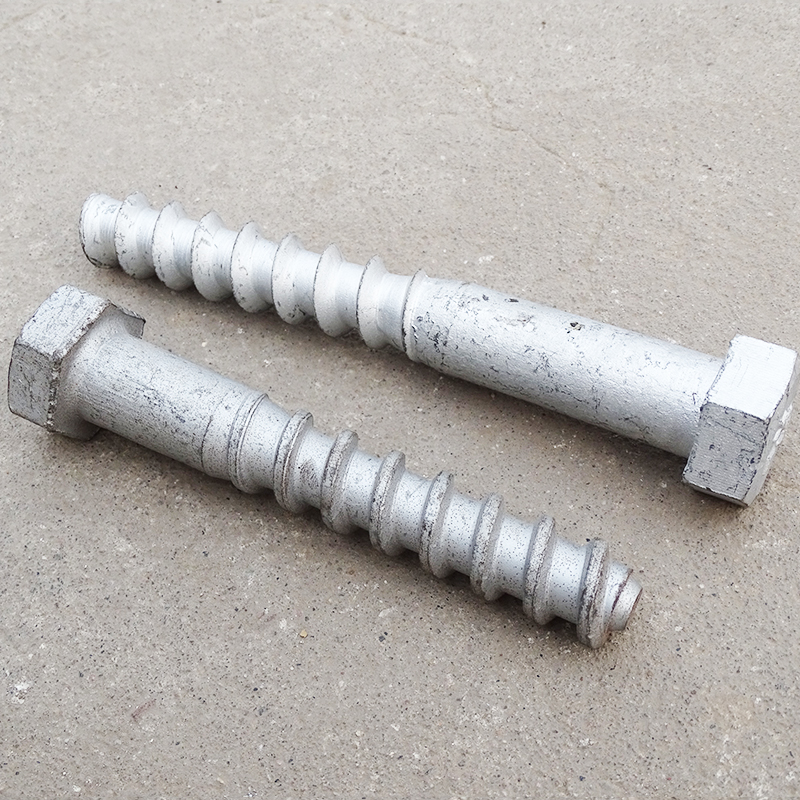
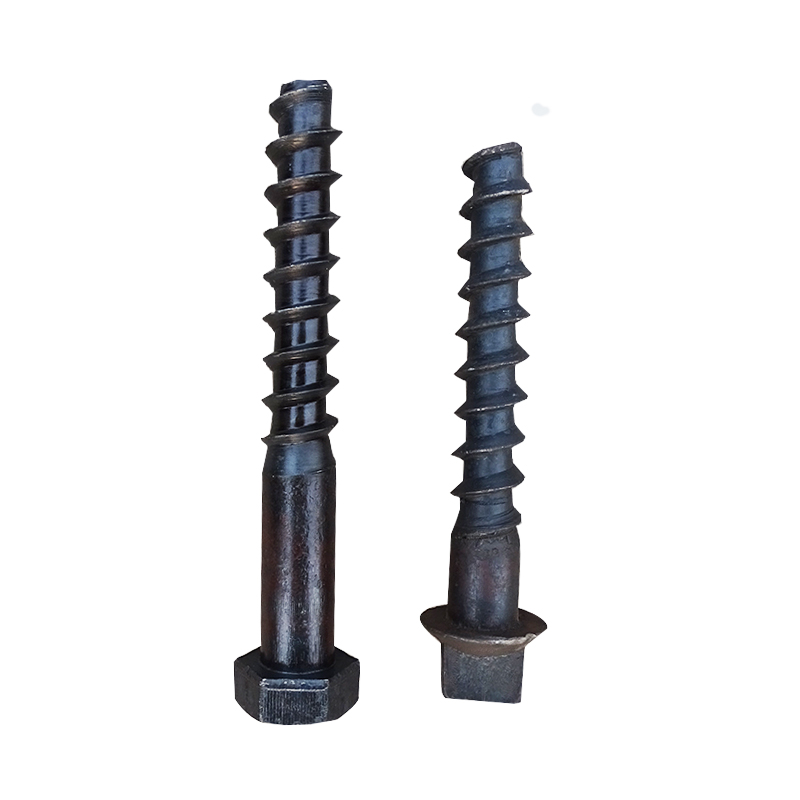
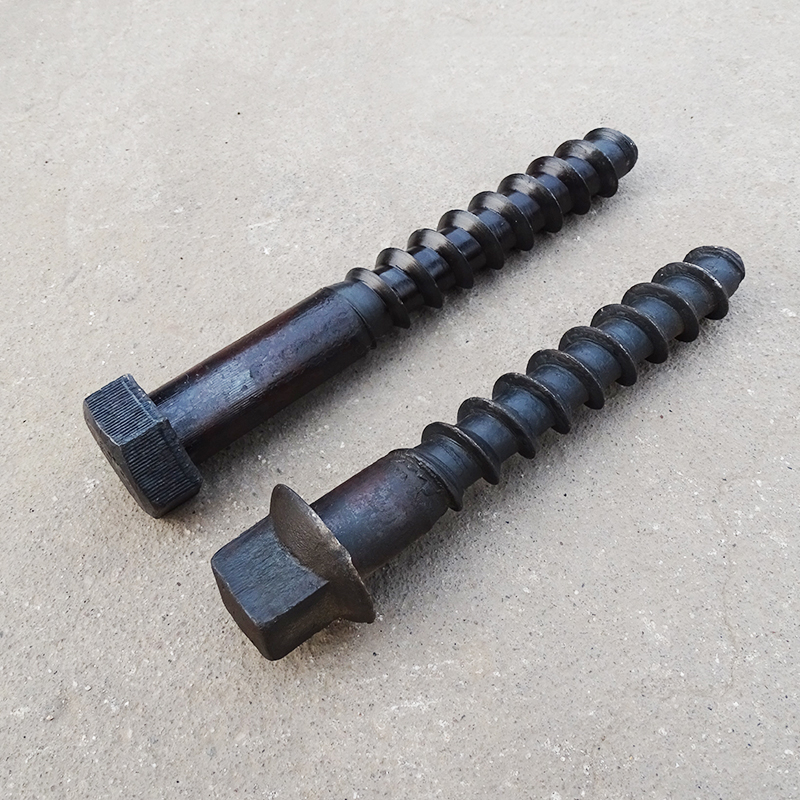
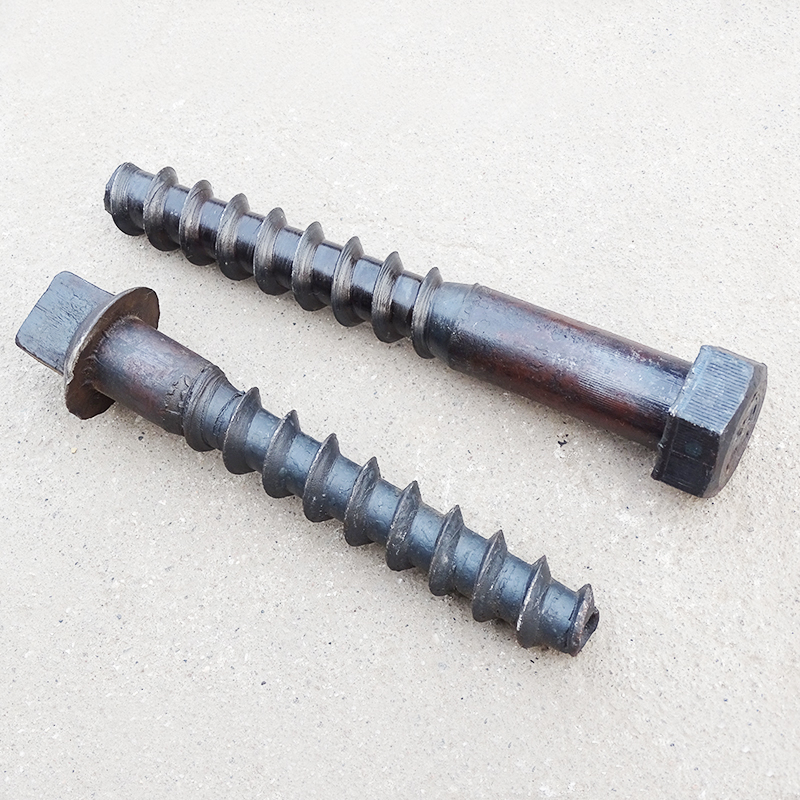
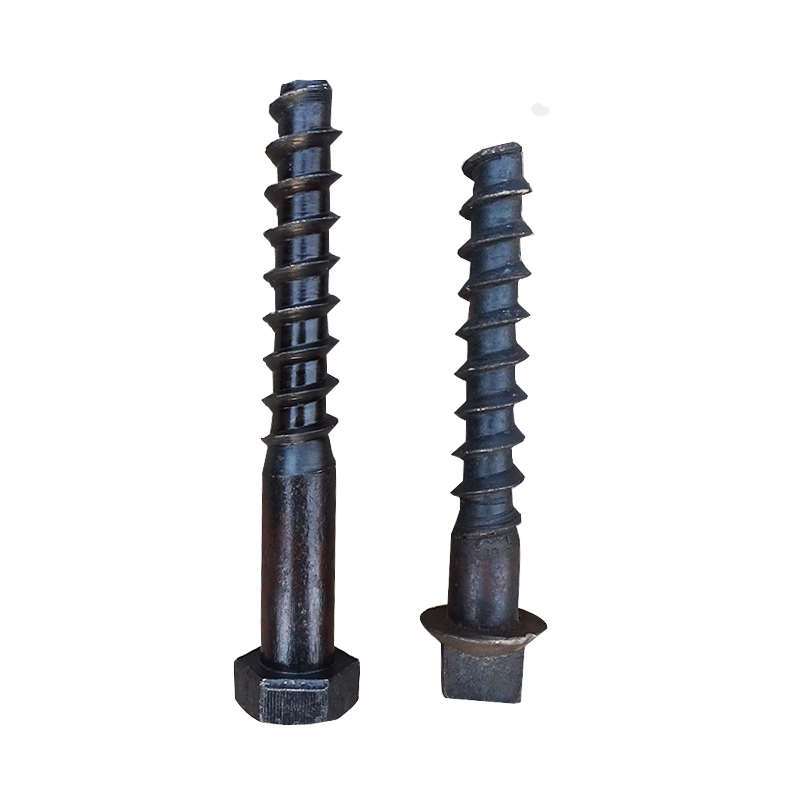
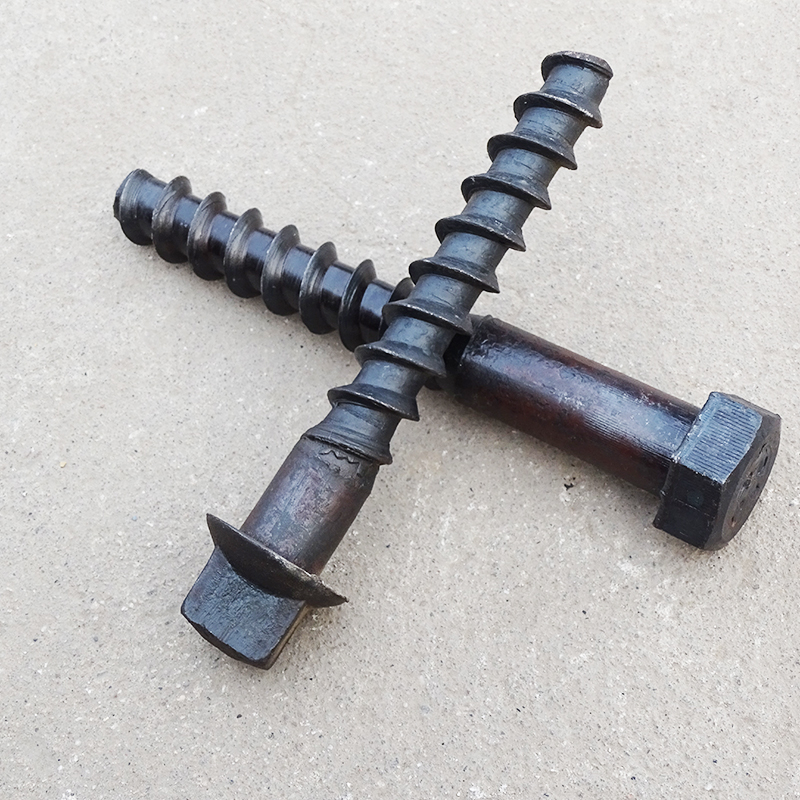
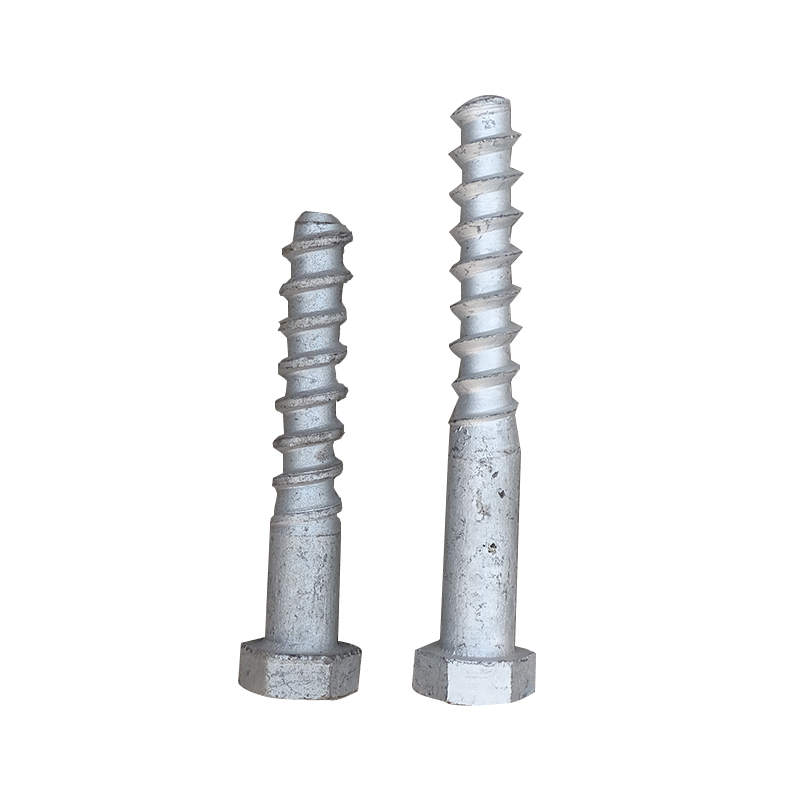
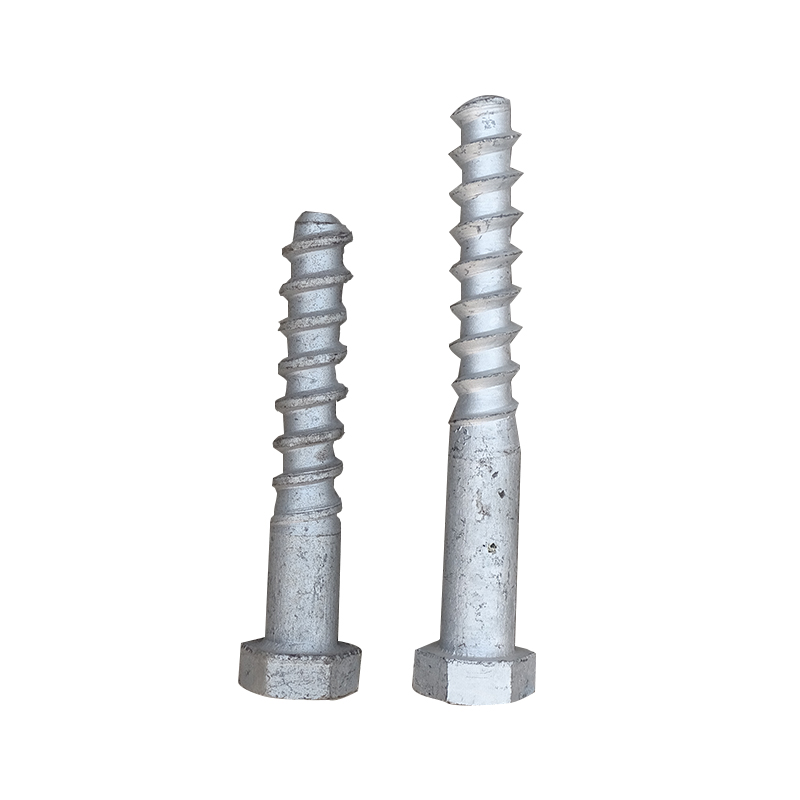
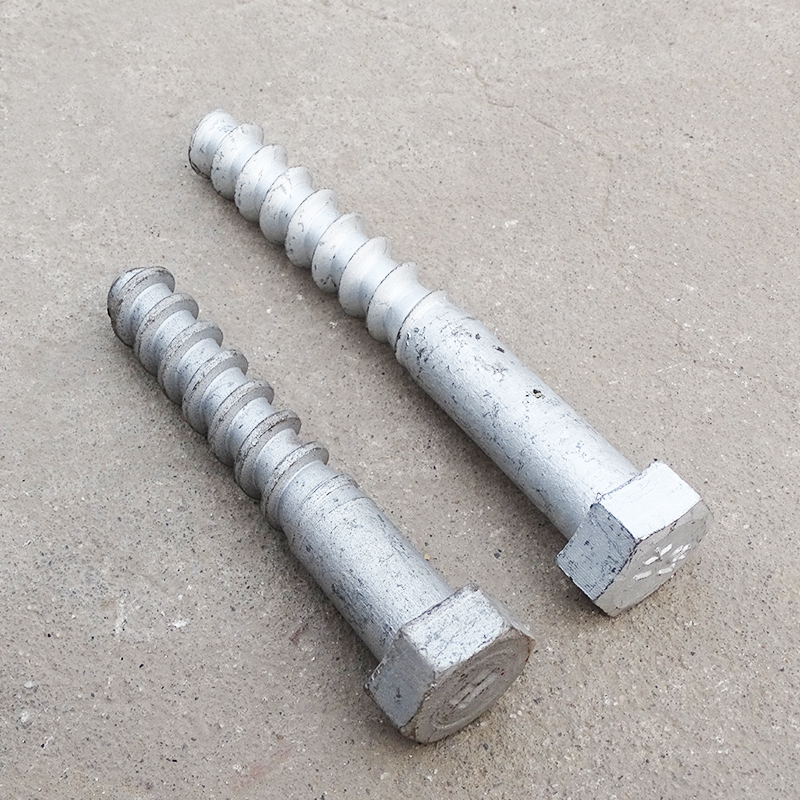
Our railway wood screw spike, also known as threaded rail spike, is a core fastener specially designed for wooden sleepers, timber ties, mine track, light rail and crossing rail fixing. It replaces traditional flat track spikes, adopts integral rolled large spiral thread design, greatly improves the gripping force on wooden sleepers, avoids loosening, popping and falling off under long-term train vibration load, widely used in national railways, local industrial railways, mine transportation lines, port yard tracks and forest logging rail transit.
This rail screw spike is forged from high-quality carbon structural steel, through integral hot forging, thread rolling, heat treatment and anti-rust blackening treatment, with high tensile strength, strong shear resistance, excellent anti-fatigue performance, adapt to outdoor all-weather harsh environment, long service life, reduce later track maintenance frequency and labor cost.
Large-pitch deep spiral tooth design, the spiral thread fully bites into the wood sleeper fiber, contact area is 3 times larger than ordinary flat spikes. When the train passes with heavy load and frequent vibration, it will not slip or loosen, effectively stabilize the rail gauge, prevent track deformation and safety hazards. The integrated retaining flange under the square head limits the sinking depth, ensures uniform pressure on the rail base plate, and avoids local crushing of sleepers.
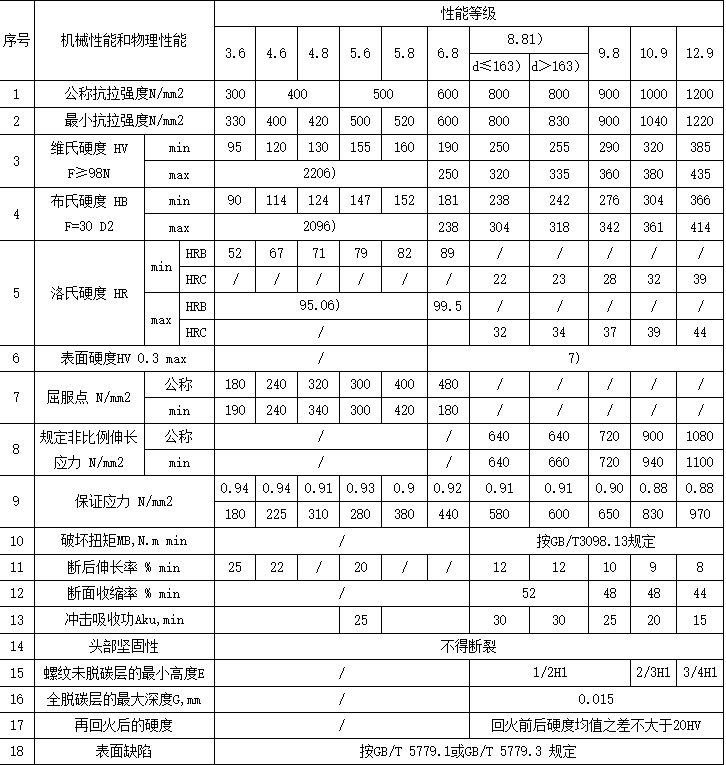
Adopt Q235 / 45# solid carbon steel blank, integral hot forging forming without splicing, no hidden crack defect. After quenching and tempering heat treatment, the product reaches standard mechanical performance: tensile strength ≥ 420MPa, yield strength ≥ 240MPa, strong impact resistance, not easy to bend or break under heavy impact of freight trains.
Uniform black oxide anti-corrosion layer on the whole surface, isolate air, rainwater, humid mud and mine corrosive water vapor. Compared with untreated raw iron, it effectively delays rust and oxidation, suitable for rainy coastal areas, underground mines, damp mountain track sections, stable performance in long-term outdoor use.
Square head + retaining flange + spiral thread integrated forging, no welding, no split parts, single piece for direct installation, matching rail base plate, elastic bar fasteners, rubber cushion to complete rail fixing. Simple construction, save on-site assembly time, greatly improve track laying efficiency.
Standard conventional sizes: 16×165mm, 18×180mm, 20×170mm, 24×195mm, 24×220mm, 24×240mm, covering light rail, passenger railway, heavy haul mine track. We support non-standard length, thread diameter, head thickness customization according to customer drawing samples, factory direct supply without middlemen, bulk order price advantage obvious.
Mainline railway, branch line railway, passenger & freight mixed rail wooden sleeper fixing
Coal mine, metal mine underground transportation track, mining light rail
Port, factory, logistics yard internal transfer track, industrial special line
Forest logging field, mountain small transportation railway, temporary construction rail
Railway crossing, platform edge track, turnout sleeper fixed fastener
Agricultural pastoral area short-distance transport rail, landscape sightseeing small train track
Material: Q235 / 45# Carbon Steel
Surface Finish: Black Oxide Anti-Rust Treatment
Processing Technology: Hot Forging + Full Thread Rolling + Quenching & Tempering Heat Treatment
Head Type: Square Hexagonal Head (suitable for manual wrench & electric track wrench installation)
Structure: Square Head + Anti-Sink Retaining Flange + Continuous Deep Spiral Thread
Standard Compliance: GB/T standard railway fastener, match international standard wooden sleeper size
Available Sizes: Multiple diameter & length combinations, custom drawing support
Pre-drill small guide holes on wooden sleepers before installation, the spiral thread can be screwed into the sleeper smoothly, no wood splitting, protect the integrity of timber sleepers.
Square head fits standard track maintenance tools, manual wrench, pneumatic spike wrench, electric rail bolt wrench all can be used for quick tightening, low construction threshold.
The retaining washer flange evenly presses the rail base plate, disperses the vertical pressure of the rail, reduces local wear of sleepers and rail fittings.
After long-term operation, disassembly and secondary reuse is available, the thread will not slide wire, maintain stable locking force after repeated disassembly.
We are a professional fastener manufacturer with 20+ years production experience, fully equipped with forging workshop, heat treatment production line, thread rolling workshop and quality inspection laboratory. All products pass tensile, shear, anti-fatigue sampling test before delivery, provide factory inspection report for customs clearance.
Support global export business, FOB Tianjin / Shanghai Port delivery, accept bulk container orders, small trial order mixed shipment acceptable. Professional foreign trade team provides product parameter sheet, installation drawing, customs clearance documents, customized packaging with customer brand logo to help independent station sellers complete product sales